Identify relevant tenders and assess them in their market context before you decide to bid.
On a standardised European dataset, multidimensional tender filters, verifiable procurement analyses and automatic alerts work hand in hand.
Shared foundation: cleaned procurement cases, canonical organisation identities & a fixed register of indicators
Precise selection instead of search noise: you define the profile, the system scores every notice.
Individual keyword or category searches either return hundreds of unsuitable matches or miss relevant procedures phrased differently or in other languages. When you start, simply describe what you do in your own words, and the AI onboarding suggests matching EU categories (CPV). You then freely combine country, region (NUTS), place of performance, language, value limits and semantic search, and exclude unsuitable buyers or criteria from the outset.
- Growing dimensions: CPV, semantics, region, place of performance, language, value limits, selection criteria and more signals all the time.
- Requirements directly on the lot: deadlines, selection criteria, award criteria and lots all in view in one place.
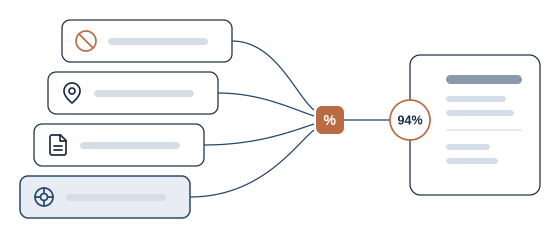
Exclusions, region, service content and CPV work together.
Look behind the notice: how a buyer awards contracts and who wins awards in the market.
Directly on the tender, in four analysis views (buyer, supplier, market, timeline) and in the dashboard builder, you look at previous awards, their distribution across companies and the share of new award recipients. The underlying notices show documented award relationships, not proof of deliveries actually made.
- Same question, same number: predefined views and your own builder tiles use identical definitions.
- Fully verifiable: every indicator carries its case count (n), coverage, value type and the list of evidence down to the notice.
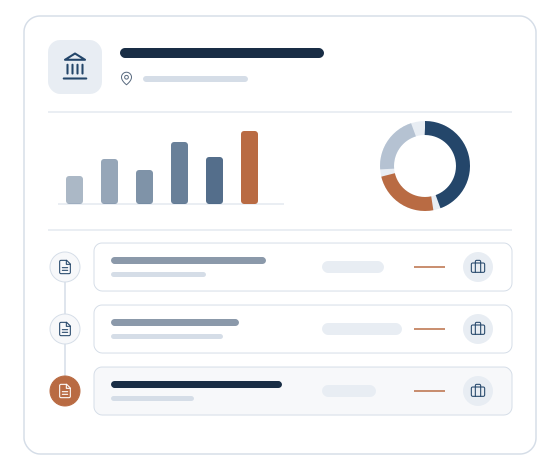
Buyer, procurement pattern and previous awards in context.
Varying spellings and scattered notices merged into one continuous record.
In public sources, the same buyers and suppliers appear under changing names, addresses and spellings, while prior information notices, tenders, corrections and awards appear as separate documents. DefAgora consolidates organisations into unique identities and connects all notices of a procurement case into one continuous procedure chain.
- Canonical organisations: spellings, address variants and identifiers consolidated across national borders.
- Clean value types: estimated value, awarded value, maximum value of the framework agreement and contract under the framework agreement are kept strictly separate.
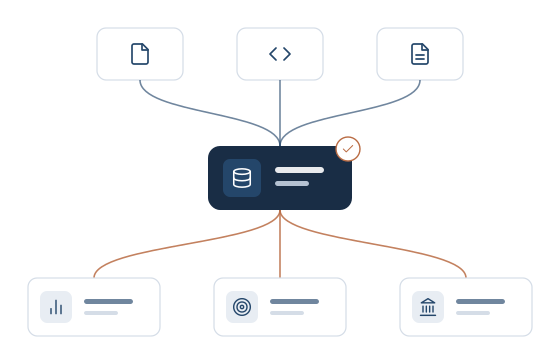
Different sources. One shared dataset for analyses, selection and organisation profiles.
Set up once: automatic signals for matching procedures, deadline changes and awards.
Instead of checking portals every day, you enter your profile, your relevance threshold and the market players you watch just once. DefAgora notifies you as soon as a matching tender is published, deadlines or procurement documents change, an award is made or a buyer or competitor you watch becomes active.
- Procedure lifecycle: from the prior information notice through changes to the winner of a lot.
- Follow buyers & suppliers: targeted signals for new tenders or contracts won.
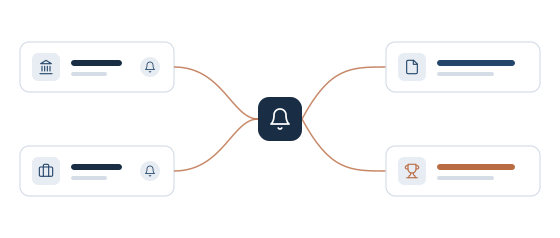
Follow players and spot relevant events: new tenders and published awards.
Test the platform on your own market segment.
Set up your profile with the help of the AI-assisted onboarding, or discuss your use case directly.